

Polysilicon Production Plant Setup, Feasibility Study, ROI Analysis and Business Plan Consultant
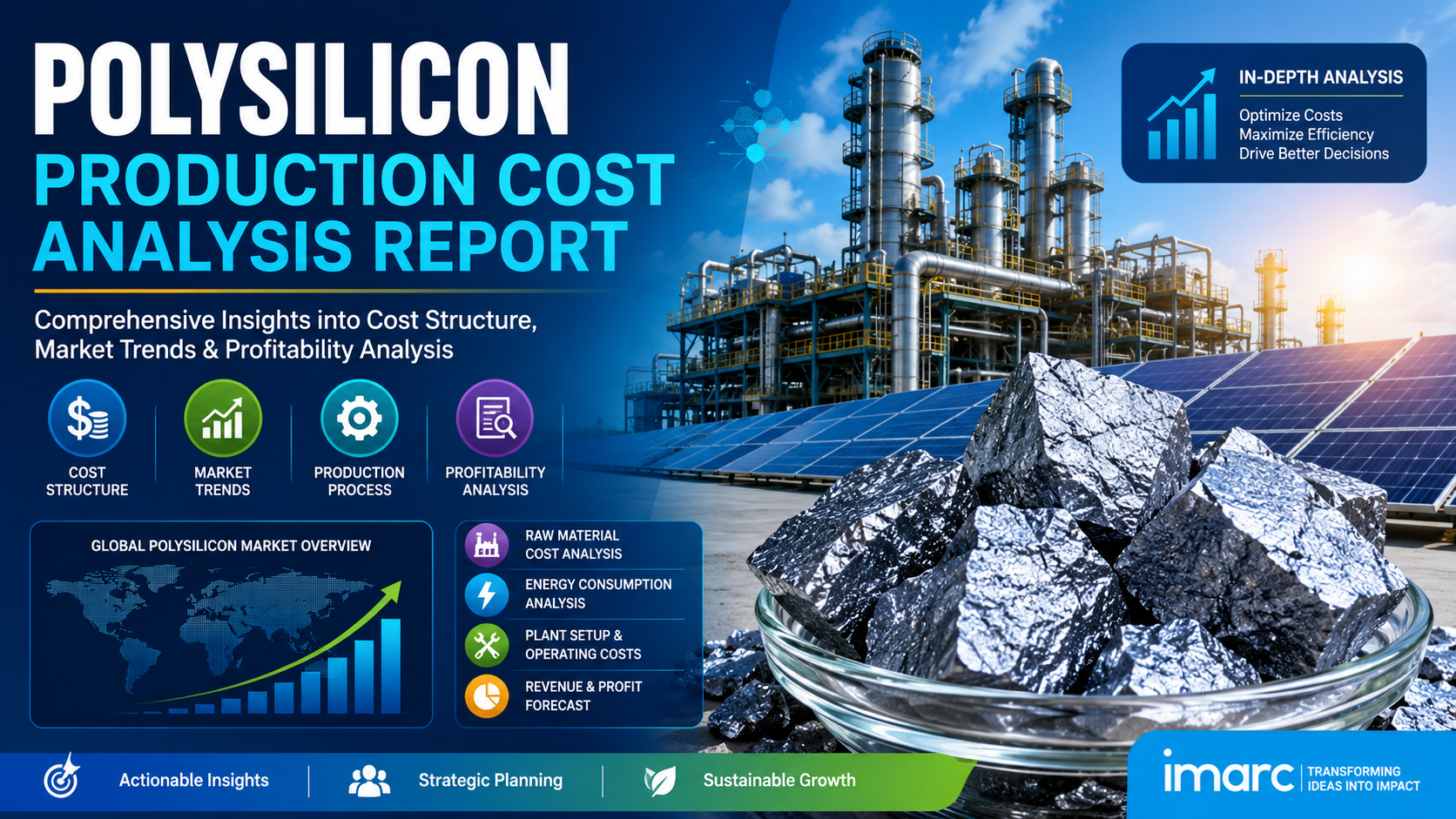
A Detailed DPR Covering CapEx/OpEx, Siemens CVD and FBR Production, ROI and the Global Opportunity in Solar-Grade and Electronic-Grade Polysilicon Manufacturing
BROOKLYN, NY, UNITED STATES, May 19, 2026 /EINPresswire.com/ -- Setting up a polysilicon production plant puts you at the base of two of the most strategically critical supply chains of the decade: solar photovoltaics and semiconductor manufacturing. Polysilicon is the feedstock from which silicon ingots, wafers, solar cells, and semiconductor chips are made — and approximately 85% of global production is concentrated in China. This concentration has become a geopolitical and supply chain risk for solar manufacturers, chip producers, and governments in the US, Europe, India, and Southeast Asia who are actively funding domestic polysilicon production capacity. The polysilicon manufacturing feasibility study for non-Chinese projects has become one of the most frequently commissioned in the clean energy and semiconductor supply chain space.IMARC Group’s Polysilicon Production Plant Project Report is a complete DPR and polysilicon plant project report for investors, chemical manufacturers, and project developers. It covers the full polysilicon production plant setup — from metallurgical silicon procurement through trichlorosilane synthesis, Siemens CVD deposition, rod harvesting, and quality testing — with complete polysilicon plant CapEx and OpEx modelling and 10-year financial projections.
𝐑𝐞𝐪𝐮𝐞𝐬𝐭 𝐟𝐨𝐫 𝐚 𝐒𝐚𝐦𝐩𝐥𝐞 𝐑𝐞𝐩𝐨𝐫𝐭: https://www.imarcgroup.com/polysilicon-production-cost-analysis-report/requestsample
𝐈𝐧𝐯𝐞𝐬𝐭𝐦𝐞𝐧𝐭 𝐃𝐫𝐢𝐯𝐞𝐫𝐬 𝐚𝐧𝐝 𝐌𝐚𝐫𝐤𝐞𝐭 𝐎𝐩𝐩𝐨𝐫𝐭𝐮𝐧𝐢𝐭𝐲
Three forces are driving polysilicon production plant investment outside China:
𝐒𝐨𝐥𝐚𝐫 𝐏𝐕 𝐫𝐨𝐥𝐥𝐨𝐮𝐭 𝐫𝐞𝐪𝐮𝐢𝐫𝐢𝐧𝐠 𝐦𝐚𝐬𝐬𝐢𝐯𝐞 𝐩𝐨𝐥𝐲𝐬𝐢𝐥𝐢𝐜𝐨𝐧 𝐬𝐮𝐩𝐩𝐥𝐲 𝐠𝐫𝐨𝐰𝐭𝐡: Solar photovoltaics account for approximately 91% of global polysilicon demand. Global annual demand for solar-grade polysilicon reached approximately 1,379,400 MT in 2025 against semiconductor-grade demand of 33,500 MT. India’s 500 GW renewable energy target and PM Surya Ghar rooftop solar programme are driving domestic module manufacturing investment at scale — yet India currently has no commercial polysilicon production. Every GW of solar panel capacity requires approximately 2,500–3,000 MT of polysilicon upstream. The supply chain gap between India’s solar ambitions and its current polysilicon production base is one of the largest untapped domestic manufacturing opportunities in the energy sector.
𝐒𝐮𝐩𝐩𝐥𝐲 𝐜𝐡𝐚𝐢𝐧 𝐝𝐢𝐯𝐞𝐫𝐬𝐢𝐟𝐢𝐜𝐚𝐭𝐢𝐨𝐧 𝐚𝐰𝐚𝐲 𝐟𝐫𝐨𝐦 𝐂𝐡𝐢𝐧𝐞𝐬𝐞 𝐝𝐨𝐦𝐢𝐧𝐚𝐧𝐜𝐞: China produces approximately 85% of global polysilicon, with China’s Xinjiang region alone accounting for approximately 45% of world output. The US Uyghur Forced Labor Prevention Act restricts Xinjiang-sourced polysilicon imports into the United States. The EU and multiple Asian governments are actively funding or incentivising domestic polysilicon capacity. In February 2026, United Solar Holding began polysilicon manufacturing operations at its Sohar Freezone facility in Oman, backed by USD 900 million in funding and producing for 40 GW of annual solar module capacity — the largest solar manufacturing plant in the Middle East. Non-Chinese polysilicon capacity commands consistent offtake interest from buyers seeking supply chain compliance.
𝐒𝐞𝐦𝐢𝐜𝐨𝐧𝐝𝐮𝐜𝐭𝐨𝐫 𝐝𝐞𝐦𝐚𝐧𝐝 𝐜𝐫𝐞𝐚𝐭𝐢𝐧𝐠 𝐚 𝐩𝐫𝐞𝐦𝐢𝐮𝐦-𝐠𝐫𝐚𝐝𝐞 𝐦𝐚𝐫𝐤𝐞𝐭: Electronic-grade polysilicon (11N purity, 99.999999999%) commands prices of USD 30–150/kg against USD 4–15/kg for solar-grade. The semiconductor supply chain — driven by AI chips, advanced nodes, and 5G infrastructure — requires a consistent, audited, non-Chinese supply of ultra-high-purity polysilicon. Taiwan Semiconductor Manufacturing Company and Samsung Foundry are investing over USD 100 billion between 2024 and 2027 to develop 3-nanometer and 2-nanometer nodes. Each new fab expansion creates downstream semiconductor polysilicon manufacturing plant demand that is price-inelastic and geopolitically motivated.
𝐏𝐨𝐥𝐲𝐬𝐢𝐥𝐢𝐜𝐨𝐧 𝐆𝐫𝐚𝐝𝐞𝐬 𝐚𝐧𝐝 𝐏𝐫𝐨𝐝𝐮𝐜𝐭 𝐑𝐚𝐧𝐠𝐞
A polysilicon production plant’s product range is defined by purity grade, which determines end market, pricing, and process requirements:
• 𝐒𝐨𝐥𝐚𝐫-𝐠𝐫𝐚𝐝𝐞 𝐩𝐨𝐥𝐲𝐬𝐢𝐥𝐢𝐜𝐨𝐧 (6𝐍, 99.9999%): The highest-volume product. Used in monocrystalline and multicrystalline ingots for solar cell manufacturing. Price range USD 4–15/kg. A solar grade polysilicon plant targeting India’s domestic solar manufacturing cluster accesses a large, policy-supported demand base.
• 𝐇𝐢𝐠𝐡-𝐩𝐮𝐫𝐢𝐭𝐲 𝐬𝐨𝐥𝐚𝐫-𝐠𝐫𝐚𝐝𝐞 𝐟𝐨𝐫 𝐍-𝐭𝐲𝐩𝐞 𝐜𝐞𝐥𝐥𝐬 (6𝐍+): Next-generation TOPCon (Tunnel Oxide Passivated Contact) and HJT (Heterojunction) solar cells require higher-purity solar-grade polysilicon than standard P-type cells. This segment is growing rapidly as leading cell manufacturers shift to higher-efficiency N-type architectures and commands a moderate price premium.
• 𝐄𝐥𝐞𝐜𝐭𝐫𝐨𝐧𝐢𝐜-𝐠𝐫𝐚𝐝𝐞 𝐩𝐨𝐥𝐲𝐬𝐢𝐥𝐢𝐜𝐨𝐧 (9𝐍–11𝐍): Used in semiconductor wafer manufacturing. Requires ultra-low metallic impurity levels (below 0.1 ppb for most metals). The highest-margin polysilicon grade at USD 30–150/kg. Only six global operators meet the most stringent semiconductor purity thresholds. Capital and process complexity are significantly higher than solar grade.
• 𝐆𝐫𝐚𝐧𝐮𝐥𝐚𝐫 𝐩𝐨𝐥𝐲𝐬𝐢𝐥𝐢𝐜𝐨𝐧 (𝐅𝐁𝐑 𝐩𝐫𝐨𝐜𝐞𝐬𝐬): Free-flowing granules produced by the fluidised bed reactor (FBR/Silane-FBR) process. Easier to handle and charge into Czochralski pullers and casting furnaces than chunk polysilicon from the Siemens process. GCL-Tech achieved 120,000 MT annual FBR output with a target cost of USD 6/kg.
• 𝐂𝐡𝐮𝐧𝐤 𝐚𝐧𝐝 𝐫𝐨𝐝 𝐩𝐨𝐥𝐲𝐬𝐢𝐥𝐢𝐜𝐨𝐧 (𝐒𝐢𝐞𝐦𝐞𝐧𝐬 𝐩𝐫𝐨𝐜𝐞𝐬𝐬): The traditional product form — cylindrical rods and crushed chunks from Siemens bell-jar reactors. Dominant in the market. Processed into solar wafers and semiconductor wafers by downstream customers.
𝐀𝐜𝐜𝐞𝐬𝐬 𝐭𝐡𝐞 𝐅𝐮𝐥𝐥 𝐏𝐨𝐥𝐲𝐬𝐢𝐥𝐢𝐜𝐨𝐧 𝐏𝐫𝐨𝐝𝐮𝐜𝐭𝐢𝐨𝐧 𝐏𝐥𝐚𝐧𝐭 𝐅𝐞𝐚𝐬𝐢𝐛𝐢𝐥𝐢𝐭𝐲 𝐑𝐞𝐩𝐨𝐫𝐭: https://www.imarcgroup.com/polysilicon-production-cost-analysis-report
𝐇𝐨𝐰 𝐚 𝐏𝐨𝐥𝐲𝐬𝐢𝐥𝐢𝐜𝐨𝐧 𝐌𝐚𝐧𝐮𝐟𝐚𝐜𝐭𝐮𝐫𝐢𝐧𝐠 𝐏𝐥𝐚𝐧𝐭 𝐖𝐨𝐫𝐤𝐬 — 𝐓𝐡𝐞 𝐒𝐢𝐞𝐦𝐞𝐧𝐬 𝐂𝐕𝐃 𝐏𝐫𝐨𝐜𝐞𝐬𝐬
The Siemens CVD polysilicon plant configuration accounts for approximately 66% of global polysilicon production. It achieves the ultra-high purity required for both solar and semiconductor applications through a multi-stage purification and deposition cycle:
• 𝐌𝐞𝐭𝐚𝐥𝐥𝐮𝐫𝐠𝐢𝐜𝐚𝐥-𝐠𝐫𝐚𝐝𝐞 𝐬𝐢𝐥𝐢𝐜𝐨𝐧 (𝐌𝐆-𝐒𝐢) 𝐩𝐫𝐨𝐜𝐮𝐫𝐞𝐦𝐞𝐧𝐭: MG-Si (98–99% purity) is sourced from silicon metal producers. It is the primary raw material at 50–60% of total OpEx. MG-Si is crushed and sized for the hydrochlorination reactor
• 𝐓𝐫𝐢𝐜𝐡𝐥𝐨𝐫𝐨𝐬𝐢𝐥𝐚𝐧𝐞 (𝐓𝐂𝐒) 𝐬𝐲𝐧𝐭𝐡𝐞𝐬𝐢𝐬: MG-Si reacts with hydrogen chloride (HCl) gas in a fluidised bed reactor at 300°C. The reaction produces trichlorosilane (SiHCl₃, TCS) and silicon tetrachloride (SiCl₄, STC) as by-products. TCS is the intermediate carrier of purified silicon
• 𝐌𝐮𝐥𝐭𝐢-𝐬𝐭𝐚𝐠𝐞 𝐓𝐂𝐒 𝐝𝐢𝐬𝐭𝐢𝐥𝐥𝐚𝐭𝐢𝐨𝐧 𝐚𝐧𝐝 𝐩𝐮𝐫𝐢𝐟𝐢𝐜𝐚𝐭𝐢𝐨𝐧: TCS is separated from STC and other chlorosilanes by multi-stage fractional distillation. This is where metallurgical impurities (boron, phosphorus, metals) are removed to achieve the target purity. Number of distillation stages and column efficiency determine final product grade
• 𝐒𝐢𝐞𝐦𝐞𝐧𝐬 𝐂𝐕𝐃 𝐝𝐞𝐩𝐨𝐬𝐢𝐭𝐢𝐨𝐧: Purified TCS and hydrogen are fed into a bell-jar reactor containing thin silicon seed rods. At 1,100°C, TCS decomposes and deposits high-purity silicon onto the rods. Rods grow to 150–200 mm diameter over 80–120 hours. This is the most energy-intensive step — a primary driver of the 30–40% utility share of total OpEx
• 𝐑𝐨𝐝 𝐜𝐨𝐨𝐥𝐢𝐧𝐠 𝐚𝐧𝐝 𝐡𝐚𝐫𝐯𝐞𝐬𝐭𝐢𝐧𝐠: Rods are cooled under controlled conditions and removed from the reactor. The bell-jar is cleaned and prepared for the next deposition cycle
• 𝐑𝐨𝐝 𝐩𝐫𝐨𝐜𝐞𝐬𝐬𝐢𝐧𝐠 — 𝐜𝐫𝐮𝐬𝐡𝐢𝐧𝐠 𝐚𝐧𝐝 𝐬𝐢𝐳𝐢𝐧𝐠: Rods are mechanically crushed into chunks of defined size distribution. Crushing is performed in cleanroom conditions to prevent contamination. For semiconductor grade, additional chemical etching removes surface contamination
• 𝐒𝐓𝐂 𝐡𝐲𝐝𝐫𝐨𝐠𝐞𝐧𝐚𝐭𝐢𝐨𝐧 𝐚𝐧𝐝 𝐛𝐲-𝐩𝐫𝐨𝐝𝐮𝐜𝐭 𝐫𝐞𝐜𝐲𝐜𝐥𝐢𝐧𝐠: STC generated in TCS synthesis and CVD off-gas is converted back to TCS by reaction with hydrogen at high temperature. This closed-loop recycling reduces raw material consumption and waste disposal, significantly improving polysilicon manufacturing unit cost economics
• 𝐐𝐮𝐚𝐥𝐢𝐭𝐲 𝐢𝐧𝐬𝐩𝐞𝐜𝐭𝐢𝐨𝐧 𝐚𝐧𝐝 𝐩𝐚𝐜𝐤𝐢𝐧𝐠: Samples are tested for resistivity, carrier lifetime, and trace metal content by ICP-MS. Product is packed in cleanroom-grade polyethylene bags, sealed in metal containers, and nitrogen-flushed for transport
𝐏𝐥𝐚𝐧𝐭 𝐈𝐧𝐯𝐞𝐬𝐭𝐦𝐞𝐧𝐭 𝐄𝐜𝐨𝐧𝐨𝐦𝐢𝐜𝐬
𝐏𝐫𝐨𝐝𝐮𝐜𝐭𝐢𝐨𝐧 𝐂𝐚𝐩𝐚𝐜𝐢𝐭𝐲:
• The proposed production facility is designed with an annual production capacity ranging between 5,000–20,000 MT, enabling economies of scale while maintaining operational flexibility
𝐏𝐫𝐨𝐟𝐢𝐭𝐚𝐛𝐢𝐥𝐢𝐭𝐲 𝐁𝐞𝐧𝐜𝐡𝐦𝐚𝐫𝐤𝐬:
• Gross Profit: 35–45%
• Net Profit: 20–30% after financing costs, depreciation, and taxes
𝐎𝐩𝐞𝐫𝐚𝐭𝐢𝐧𝐠 𝐂𝐨𝐬𝐭 (𝐎𝐩𝐄𝐱) 𝐁𝐫𝐞𝐚𝐤𝐝𝐨𝐰𝐧:
• Raw Materials (metallurgical-grade silicon, HCl, hydrogen): 50–60% of total OpEx
• Utilities: 30–40% of OpEx — CVD deposition at 1,100°C and continuous reactor operation make polysilicon one of the most electricity-intensive chemical manufacturing processes
𝐏𝐨𝐥𝐲𝐬𝐢𝐥𝐢𝐜𝐨𝐧 𝐏𝐥𝐚𝐧𝐭 𝐂𝐚𝐩𝐄𝐱 𝐂𝐨𝐦𝐩𝐨𝐧𝐞𝐧𝐭𝐬:
• 𝐋𝐚𝐧𝐝 𝐚𝐧𝐝 𝐟𝐚𝐜𝐭𝐨𝐫𝐲: cleanroom assembly areas, TCS synthesis and distillation hall, CVD reactor building, rod processing and packaging cleanroom, gas storage and safety infrastructure
• 𝐂𝐨𝐫𝐞 𝐩𝐫𝐨𝐜𝐞𝐬𝐬 𝐞𝐪𝐮𝐢𝐩𝐦𝐞𝐧𝐭: Siemens bell-jar CVD reactors (the largest CapEx item), TCS synthesis fluidised bed reactor, multi-stage distillation columns, STC hydrogenation unit, rod crushing and sizing equipment
• 𝐔𝐭𝐢𝐥𝐢𝐭𝐢𝐞𝐬 𝐚𝐧𝐝 𝐬𝐚𝐟𝐞𝐭𝐲: high-capacity power supply for CVD heating, HCl and H₂ handling systems, chlorosilane condensation and storage, gas abatement and tail-gas treatment, fire and explosion protection
• FBR option: fluidised bed reactors using silane (SiH₄) reduce electricity consumption by approximately 40% versus Siemens CVD and produce granular polysilicon with lower CapEx per MT — an important alternative configuration for solar-grade production
• 𝐏𝐫𝐞-𝐨𝐩𝐞𝐫𝐚𝐭𝐢𝐯𝐞 𝐜𝐨𝐬𝐭𝐬: process technology licence, commissioning, operator training, safety system qualification; polysilicon production cost analysis should include licence royalty in CapEx modelling.
𝐀𝐬𝐤 𝐀𝐧𝐚𝐥𝐲𝐬𝐭 𝐟𝐨𝐫 𝐂𝐮𝐬𝐭𝐨𝐦𝐢𝐳𝐚𝐭𝐢𝐨𝐧: https://www.imarcgroup.com/request?type=report&id=45414&flag=C
𝐆𝐥𝐨𝐛𝐚𝐥 𝐌𝐚𝐫𝐤𝐞𝐭 𝐚𝐧𝐝 𝐑𝐞𝐠𝐢𝐨𝐧𝐚𝐥 𝐃𝐞𝐦𝐚𝐧𝐝
The global polysilicon market, valued at USD 12.91 billion in 2025, is projected to reach USD 26.46 billion by 2034 at a CAGR of 8.30%. Asia Pacific holds approximately 64% of global market share, with China as the dominant producer.
𝐈𝐧𝐝𝐢𝐚: India’s 500 GW renewable energy target, PM Surya Ghar programme, and India Semiconductor Mission together represent the largest domestic demand driver for polysilicon in the Asia-Pacific region outside China. Adani Group began commercial manufacturing of solar ingots and wafers at its Gujarat facility in 2024 and has announced plans to integrate polysilicon production by 2027–28. Kolla’s 10 GW solar complex includes a 30,000 MT/year polysilicon facility targeting completion by 2026. India currently has no commercial polysilicon production, importing entirely from China and a small share from other sources.
𝐂𝐡𝐢𝐧𝐚: Controls approximately 85% of global polysilicon capacity through producers including GCL-Poly, Daqo New Energy, Xinte Energy, and Tongwei Solar. In December 2025, China established the Beijing Guanghe Qiancheng Technology platform with CNY 3 billion to manage industry consolidation and address overcapacity. Chinese polysilicon at USD 4–8/kg sets the global price floor for solar-grade supply.
𝐔𝐧𝐢𝐭𝐞𝐝 𝐒𝐭𝐚𝐭𝐞𝐬: Active reshoring of polysilicon capacity under the Inflation Reduction Act. REC Silicon’s Moses Lake facility operates a hybrid Siemens-FBR configuration. Hemlock Semiconductor expanded its Michigan production to serve both semiconductor and solar markets. UFLPA restrictions on Xinjiang-origin polysilicon have created a premium market for US-produced material.
𝐄𝐮𝐫𝐨𝐩𝐞 𝐚𝐧𝐝 𝐌𝐢𝐝𝐝𝐥𝐞 𝐄𝐚𝐬𝐭: Wacker Chemie (Germany) is the largest non-Chinese Siemens-process producer. In February 2026, United Solar Holding commissioned polysilicon production at Oman’s Sohar Freezone — the Middle East’s largest solar manufacturing complex — with USD 900 million in funding. Middle Eastern producers benefit from low-cost renewable electricity and proximity to Asian and European buyers.
𝐒𝐢𝐭𝐞 𝐒𝐞𝐥𝐞𝐜𝐭𝐢𝐨𝐧 𝐚𝐧𝐝 𝐏𝐨𝐥𝐢𝐜𝐲 𝐒𝐮𝐩𝐩𝐨𝐫𝐭
Location decisions for a polysilicon plant setup are primarily driven by electricity cost and safety infrastructure:
• 𝐄𝐥𝐞𝐜𝐭𝐫𝐢𝐜𝐢𝐭𝐲 𝐬𝐮𝐩𝐩𝐥𝐲 𝐚𝐧𝐝 𝐜𝐨𝐬𝐭: CVD deposition at 1,100°C is the single largest energy consumer in the plant. Electricity typically accounts for 40% of polysilicon manufacturing unit cost. Sites with access to competitive long-term power — renewable energy PPAs, industrial park power tariffs, or captive solar/wind capacity — are essential. Renewable-powered polysilicon production qualifies for green premium pricing in sustainability-conscious supply chains
• 𝐌𝐞𝐭𝐚𝐥𝐥𝐮𝐫𝐠𝐢𝐜𝐚𝐥 𝐬𝐢𝐥𝐢𝐜𝐨𝐧 𝐬𝐮𝐩𝐩𝐥𝐲: MG-Si is the primary raw material at 50–60% of OpEx. Proximity to silicon metal production in Odisha, Chhattisgarh (India), Norway, or Brazil reduces inbound logistics cost and procurement lead time
• 𝐒𝐚𝐟𝐞𝐭𝐲 𝐚𝐧𝐝 𝐡𝐚𝐳𝐚𝐫𝐝𝐨𝐮𝐬 𝐜𝐡𝐞𝐦𝐢𝐜𝐚𝐥 𝐢𝐧𝐟𝐫𝐚𝐬𝐭𝐫𝐮𝐜𝐭𝐮𝐫𝐞: Polysilicon production involves HCl, H₂, TCS, and STC — all toxic, flammable, or corrosive. Industrial zones with established hazardous chemical handling capability, trained emergency response, and chlorosilane storage infrastructure reduce the cost and timeline for safety approvals and plant commissioning
• 𝐖𝐚𝐭𝐞𝐫 𝐚𝐧𝐝 𝐜𝐨𝐨𝐥𝐢𝐧𝐠: CVD reactors and distillation columns require significant cooling water. Sites with reliable industrial water supply or access to dry cooling systems are a baseline requirement
• 𝐆𝐨𝐯𝐞𝐫𝐧𝐦𝐞𝐧𝐭 𝐢𝐧𝐜𝐞𝐧𝐭𝐢𝐯𝐞𝐬: India — India Semiconductor Mission (ISM) providing up to 50% fiscal support for semiconductor supply chain investments including polysilicon; Modified Special Incentive Package Scheme (M-SIPS); PLI for solar PV manufacturing supporting downstream customer base. US — IRA Section 45X manufacturing credits. EU — European Chips Act supply chain support
𝐑𝐞𝐩𝐨𝐫𝐭 𝐂𝐨𝐯𝐞𝐫𝐚𝐠𝐞
IMARC Group’s Polysilicon Plant Project Report is a complete polysilicon manufacturing business plan and technical reference:
• 𝐅𝐮𝐥𝐥 𝐩𝐫𝐨𝐜𝐞𝐬𝐬 𝐟𝐥𝐨𝐰 𝐰𝐢𝐭𝐡 𝐦𝐚𝐬𝐬 𝐛𝐚𝐥𝐚𝐧𝐜𝐞: from MG-Si procurement through TCS synthesis, distillation, CVD deposition, rod processing, STC recycling, and dispatch
• 𝐏𝐨𝐥𝐲𝐬𝐢𝐥𝐢𝐜𝐨𝐧 𝐩𝐥𝐚𝐧𝐭 𝐂𝐚𝐩𝐄𝐱 𝐛𝐫𝐞𝐚𝐤𝐝𝐨𝐰𝐧: CVD reactors, distillation columns, synthesis reactor, rod processing, utilities and safety systems
• 10-𝐲𝐞𝐚𝐫 𝐎𝐩𝐄𝐱 𝐩𝐫𝐨𝐣𝐞𝐜𝐭𝐢𝐨𝐧𝐬: polysilicon plant OpEx covering MG-Si, HCl, hydrogen, electricity, labour, and maintenance
• 𝐅𝐢𝐧𝐚𝐧𝐜𝐢𝐚𝐥 𝐦𝐨𝐝𝐞𝐥: polysilicon plant ROI, IRR, NPV, DSCR, break-even, and sensitivity tables across MG-Si price and electricity tariff scenarios
• 𝐓𝐞𝐜𝐡𝐧𝐨𝐥𝐨𝐠𝐲 𝐬𝐞𝐥𝐞𝐜𝐭𝐢𝐨𝐧: Siemens CVD versus FBR — CapEx, energy, product form, and purity comparison
• 𝐏𝐫𝐨𝐝𝐮𝐜𝐭 𝐦𝐢𝐱 𝐬𝐭𝐫𝐚𝐭𝐞𝐠𝐲: solar-grade versus electronic-grade versus N-type high-purity solar — margin and market access comparison for a semiconductor polysilicon manufacturing plant
• 𝐏𝐨𝐥𝐲𝐬𝐢𝐥𝐢𝐜𝐨𝐧 𝐩𝐥𝐚𝐧𝐭 𝐬𝐞𝐭𝐮𝐩 𝐜𝐨𝐬𝐭 𝐛𝐞𝐧𝐜𝐡𝐦𝐚𝐫𝐤𝐢𝐧𝐠: across 5,000, 10,000, and 20,000 MT/year configurations
• 𝐑𝐞𝐠𝐮𝐥𝐚𝐭𝐨𝐫𝐲 𝐜𝐨𝐦𝐩𝐥𝐢𝐚𝐧𝐜𝐞: hazardous chemicals storage (PESO), MSIHC Rules, cleanroom standards for electronic grade, UFLPA supply chain documentation for US export markets
The report is built for chemical and energy investors evaluating a polysilicon production plant investment, solar module manufacturers evaluating upstream feedstock security, semiconductor supply chain developers, and banks requiring a bankable polysilicon manufacturing feasibility study for project financing.
𝐁𝐫𝐨𝐰𝐬𝐞 𝐌𝐨𝐫𝐞 𝐅𝐞𝐚𝐬𝐢𝐛𝐢𝐥𝐢𝐭𝐲 𝐒𝐭𝐮𝐝𝐲 𝐚𝐧𝐝 𝐁𝐮𝐬𝐢𝐧𝐞𝐬𝐬 𝐏𝐥𝐚𝐧 𝐑𝐞𝐩𝐨𝐫𝐭𝐬 𝐛𝐲 𝐈𝐌𝐀𝐑𝐂 𝐆𝐫𝐨𝐮𝐩:
• 𝗙𝗶𝘀𝗵 𝗣𝗿𝗼𝗰𝗲𝘀𝘀𝗶𝗻𝗴 𝗣𝗹𝗮𝗻𝘁 𝗣𝗿𝗼𝗷𝗲𝗰𝘁 𝗥𝗲𝗽𝗼𝗿𝘁: https://www.imarcgroup.com/fish-processing-plant-project-report
• 𝗚𝗹𝗮𝘀𝘀 𝗕𝗼𝘁𝘁𝗹𝗲 𝗠𝗮𝗻𝘂𝗳𝗮𝗰𝘁𝘂𝗿𝗶𝗻𝗴 𝗣𝗹𝗮𝗻𝘁 𝗣𝗿𝗼𝗷𝗲𝗰𝘁 𝗥𝗲𝗽𝗼𝗿𝘁: https://www.imarcgroup.com/glass-bottle-manufacturing-plant-project-report
• 𝗟𝗶𝘁𝗵𝗶𝘂𝗺-𝗜𝗼𝗻 𝗕𝗮𝘁𝘁𝗲𝗿𝘆 𝗠𝗮𝗻𝘂𝗳𝗮𝗰𝘁𝘂𝗿𝗶𝗻𝗴 𝗣𝗹𝗮𝗻𝘁 𝗣𝗿𝗼𝗷𝗲𝗰𝘁 𝗥𝗲𝗽𝗼𝗿𝘁: https://www.imarcgroup.com/lithium-ion-battery-recycling-plant-project-report
• 𝗠𝗶𝗹𝗹𝗲𝘁 𝗣𝗿𝗼𝗰𝗲𝘀𝘀𝗶𝗻𝗴 𝗣𝗹𝗮𝗻𝘁 𝗣𝗿𝗼𝗷𝗲𝗰𝘁 𝗥𝗲𝗽𝗼𝗿𝘁: https://www.imarcgroup.com/millet-processing-plant-project-report
• 𝗗𝗲𝗻𝗶𝗺 𝗙𝗮𝗯𝗿𝗶𝗰 𝗠𝗮𝗻𝘂𝗳𝗮𝗰𝘁𝘂𝗿𝗶𝗻𝗴 𝗣𝗹𝗮𝗻𝘁 𝗣𝗿𝗼𝗷𝗲𝗰𝘁 𝗥𝗲𝗽𝗼𝗿𝘁: https://www.imarcgroup.com/denim-fabric-manufacturing-plant-project-report
• 𝗗𝗶𝗮𝗽𝗲𝗿 𝗠𝗮𝗻𝘂𝗳𝗮𝗰𝘁𝘂𝗿𝗶𝗻𝗴 𝗣𝗹𝗮𝗻𝘁 𝗣𝗿𝗼𝗷𝗲𝗰𝘁 𝗥𝗲𝗽𝗼𝗿𝘁: https://www.imarcgroup.com/diaper-manufacturing-plant-project-report
• 𝗘𝗹𝗲𝗰𝘁𝗿𝗶𝗰𝗮𝗹 𝗣𝗮𝗻𝗲𝗹 𝗠𝗮𝗻𝘂𝗳𝗮𝗰𝘁𝘂𝗿𝗶𝗻𝗴 𝗣𝗹𝗮𝗻𝘁 𝗣𝗿𝗼𝗷𝗲𝗰𝘁 𝗥𝗲𝗽𝗼𝗿𝘁: https://www.imarcgroup.com/electrical-panel-manufacturing-plant-project-report
• 𝗖𝗼𝗻𝘁𝗮𝗶𝗻𝗲𝗿 𝗠𝗮𝗻𝘂𝗳𝗮𝗰𝘁𝘂𝗿𝗶𝗻𝗴 𝗣𝗹𝗮𝗻𝘁 𝗣𝗿𝗼𝗷𝗲𝗰𝘁 𝗥𝗲𝗽𝗼𝗿𝘁: https://www.imarcgroup.com/container-manufacturing-plant-project-report
• 𝗔𝗺𝗶𝗻𝗼 𝗔𝗰𝗶𝗱 𝗣𝗿𝗼𝗱𝘂𝗰𝘁𝗶𝗼𝗻 𝗣𝗹𝗮𝗻𝘁 𝗣𝗿𝗼𝗷𝗲𝗰𝘁 𝗥𝗲𝗽𝗼𝗿𝘁: https://www.imarcgroup.com/amino-acid-manufacturing-plant-project-report
𝐀𝐛𝐨𝐮𝐭 𝐈𝐌𝐀𝐑𝐂 𝐆𝐫𝐨𝐮𝐩
IMARC Group is a global market research and management consulting firm. Its plant setup and DPR practice serves investors, developers, government agencies, and banks across 50+ countries, delivering reports used for loan documentation, investment approvals, and engineering planning.
Elena Anderson
IMARC Services Private Limited
+1 201-971-6302
email us here
Legal Disclaimer:
EIN Presswire provides this news content "as is" without warranty of any kind. We do not accept any responsibility or liability for the accuracy, content, images, videos, licenses, completeness, legality, or reliability of the information contained in this article. If you have any complaints or copyright issues related to this article, kindly contact the author above.
